MegaloadThe go-to choice for heavy-duty machines such as general plant equipment, excavators, dumpers, and rollers.
EasiloadSpecifically designed for machinery with low-ground clearance, including access platforms and MEWPs.
MultiloadA multifunctional plant body for crane vehicles, engineered to transport containers, plant and other non-driven items.
CombiloadOffering both intricate details and the robustness required for access platforms and heavy machinery.
Miniload NEWCompact, agile, and built for tight turns and urban jobs – perfect for transporting lighter plant, from tools to mini diggers, and compactors.
Electric Truck Grants: What They Mean for Construction, Plant Hire and Fleet Operators
Published on: 7th January 2026
The start of 2026 has delivered a significant and timely shake-up for operators and fleet managers in the UK transport, construction, and plant hire sectors: the government has expanded financial support for electric heavy goods vehicles (HGVs), making zero-emission trucks more affordable – at exactly the moment many businesses are planning fleet renewals or expansions.
This isn’t just another press release – it’s a development that could influence fleet strategy, ownership costs, and future-proofing plans for operators juggling operational performance, sustainability requirements, and client expectations.
What’s Changing: More Support for Electric Trucks Until March 2026
On 6 January 2026, the UK Government confirmed an additional £18 million investment into the Plug-in Truck Grant, extending and increasing the support available for electric lorries until 31 March 2026.
This forms part of a wider £318 million green freight investment programme designed to reduce emissions, support growth and accelerate uptake of low-emission vehicles across UK supply chains.
Under the new funding levels, eligible businesses can access:
Up to £20,000 savings on smaller electric trucks (4.25 t–12 t)
Up to £60,000 savings on mid-sized trucks (12 t–18 t)
Up to £80,000 for larger trucks (18 t–26 t)
Up to £120,000 for the largest HGVs (26 t+)
This tiered grant structure is designed to make electric truck acquisition more commercially viable for businesses of all sizes – from smaller regional operators to national plant hire firms.
Why This Matters for Plant & Construction Operators
For anyone managing a plant hire fleet or operating in construction logistics, the financial barrier to electric vehicle (EV) adoption has historically been the higher upfront cost compared with diesel equivalents. While electric trucks can deliver lower day-to-day running costs, reduced maintenance, and lower emissions, the capital cost gap has been a real sticking point for organisations planning long-term fleet replacement cycles.
This new grant support significantly improves that calculus – especially for heavier trucks commonly used in plant transport and heavy logistics.
Commercial Certainty During Fleet Planning
Many UK operators plan fleet renewals a year or more in advance. Having a clear subsidy programme into March 2026 gives fleet managers confidence in financial modelling, avoiding the uncertainty that can stall investment decisions.
Lower Total Cost of Ownership
For trucks that are on the road most days, the cumulative savings in fuel, servicing, and emissions-related charges can be significant. The larger upfront grant means quicker ROI on zero-emission trucks – a factor that’s increasingly factored into procurement decisions, especially where clients demand sustainable logistics credentials.
Alignment with Sector Decarbonisation Targets
The Government has also launched a consultation on a regulatory roadmap to phase out new non-zero emission HGVs by 2040. This long-term policy direction signals an industry transition towards zero-emission transport that business owners can no longer ignore.
Having clarity on future regulation allows operators and fleet directors to plan with foresight rather than being reactive to policy shifts.
Electric Trucks and Plant Bodies: From Early Adoption to Real-World Delivery
For Sterling, electric trucks are not a future consideration – we have been mounting plant bodies to electric chassis for some time, working alongside operators who are actively introducing zero-emission vehicles into their fleets.
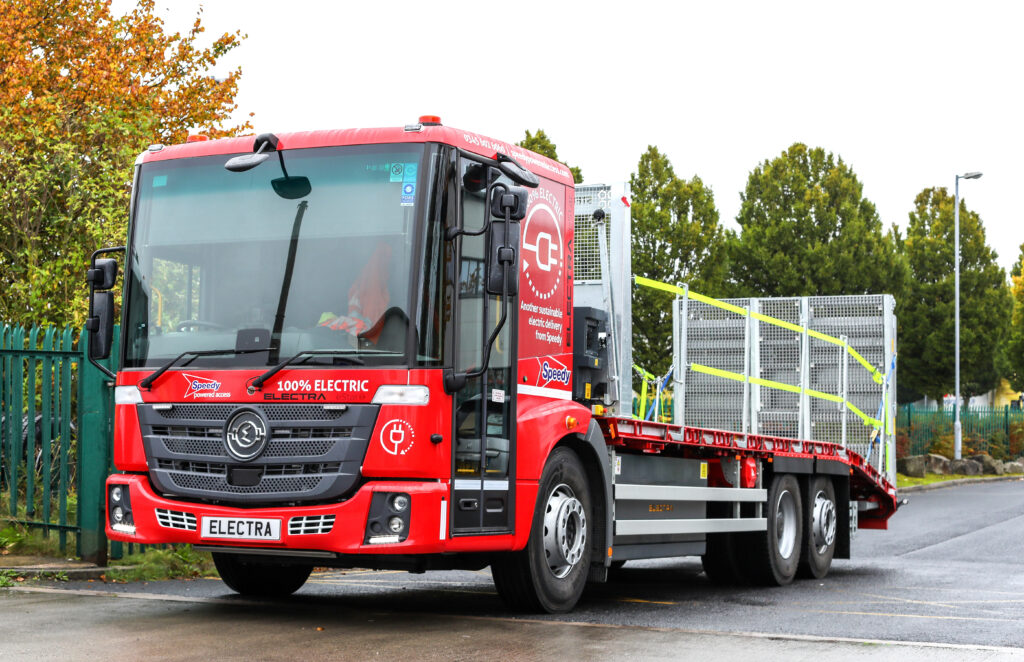
A clear example of this is our work with Speedy Powered Access, where Sterling designed and built the UK’s first 27-tonne all-electric beavertail plant body, mounted on an Electra chassis. This vehicle was developed for real operational use, not as a concept – engineered to transport heavy powered access equipment while meeting the performance and safety expectations of a national hire fleet.
This project demonstrated something important for operators and fleet managers considering electric HGVs: the transition does not require compromise on body design, usability, or site performance. The same practical considerations still apply – safe loading angles, payload efficiency, load security, durability, and ease of operation – and they must be addressed properly at the body specification stage.
Because Sterling has already delivered electric beavertail solutions at the heavier end of the market, we understand how to account for factors such as chassis layout, weight distribution, and operational duty cycles – without changing how the vehicle needs to perform on site. Whether the truck is diesel or electric, the body still must work every day, under pressure, in real, varied, and often rigorous environments.
What This Means for Operators and Fleet Managers
With the Plug-in Truck Grant now making electric HGVs significantly more accessible, many operators are reviewing how zero-emission vehicles fit into their next replacement cycle. The key point is that body specification should move in parallel with chassis decisions, not as an afterthought.
Sterling’s experience of mounting plant bodies to electric vehicles means operators can:
Specify electric trucks without sacrificing proven body designs
Avoid costly redesigns or compromises later in the build process
Maintain consistent loading methods, safety standards, and operational workflows across mixed fleets
Introduce zero-emission vehicles confidently into construction, civils, and plant hire operations
For plant hire companies and contractors working with local authorities, utilities, or major infrastructure frameworks, this also supports wider sustainability commitments – without disrupting productivity on site.
Conclusion
The enhanced Plug-in Truck Grant represents a meaningful opportunity for UK operators to invest in electric trucks with far greater financial certainty. However, unlocking the full benefit of that investment depends on more than the chassis alone.
Sterling’s track record, including delivering the first 27-tonne electric beavertail to market, shows that electric plant transport is already viable when body design is handled correctly. Whether operators are running diesel fleets today or introducing electric vehicles tomorrow, the priority remains the same: reliable, safe, and efficient plant transport that performs in real working conditions.
As the market moves forward, experience matters. And for operators making long-term fleet decisions, proven delivery is just as important as policy support.
"‘We have had Sterling bodies on the fleet since 2017 and they have always performed well for the machines that we operate. The backup support allows us to rely on maximum up-time for our delivery service to our clients. With the new livery and the enhancements to the specification, these trucks will allow us to maintain the highest standards of safety and efficiency for years to come.’ "